


Bangladesh experienced one of the most severe flood crises in recent decades. Triggered by excessive rainfall across the India-Bangladesh basin and intensified by upstream water flow, the floods severely affected eastern regions including Feni, Cumilla, Noakhali, Lakshmipur, as well as parts of the Chittagong Hill Tracts.
The disaster impacted over 5.5 million people, leaving nearly 900,000 families stranded and displacing around 500,000 individuals into emergency shelters. Beyond the immediate humanitarian impact, the floods significantly disrupted education, livelihoods, agriculture, and access to essential services across the affected regions.
In response to the crisis, the people of Bangladesh demonstrated remarkable resilience and solidarity. To support relief and rehabilitation efforts, Give Bangladesh Foundation launched the “Fight Against Flood” campaign, with support from ShareTrip and other partners, focusing on both emergency response and long-term recovery.
Emergency Relief Efforts
During the initial phases of the campaign, relief operations were carried out across the worst-affected districts between 21 August and 9 September.
Support included the distribution of dry food packages, cooked meals, and essential relief supplies to thousands of families. Over 500 individuals were successfully rescued, while healthcare support was provided to more than 890 people affected by the floods.
In total, the initiative reached over 94,000 beneficiaries through coordinated emergency relief efforts.
Rehabilitation and Recovery Initiatives
As floodwaters receded, the focus shifted towards rehabilitation and rebuilding livelihoods, particularly in remote areas such as Porshuram Upazila.
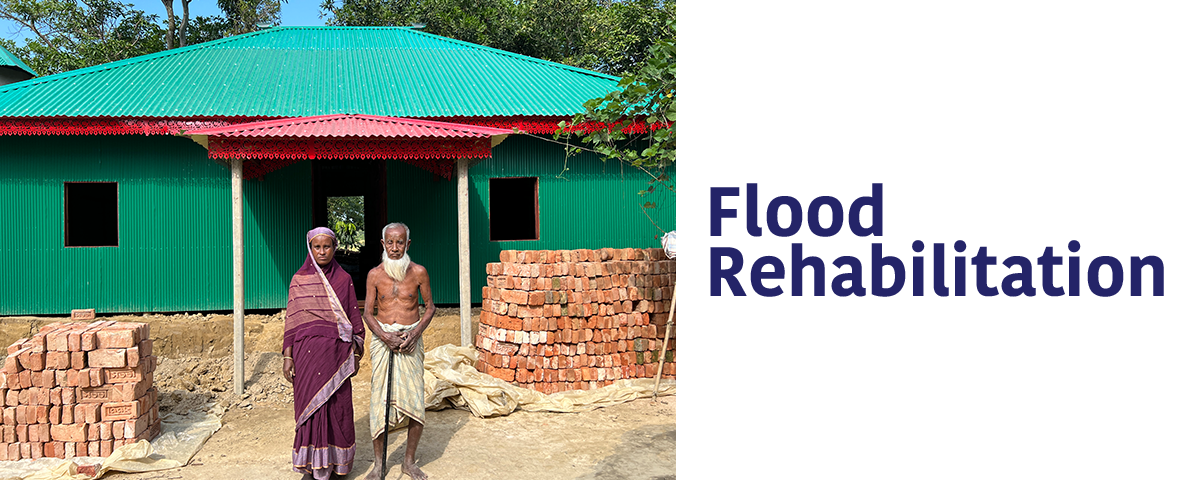
Key rehabilitation efforts included the reconstruction of homes for displaced families to help restore stability and shelter. Educational support was also prioritised, with more than 4,400 students receiving stationery kits to enable them to resume their studies.
In addition, agricultural recovery was supported through the distribution of seeds, fertilisers, and essential farming inputs to affected households, helping farmers restart cultivation and restore their livelihoods.
A tree plantation initiative was also undertaken in institutional areas of Porshuram, contributing to environmental restoration and long-term sustainability.
A Collective Path Towards Recovery
The 2024 floods left a profound impact on eastern Bangladesh; however, they also highlighted the strength of collective action and community resilience.
Through coordinated efforts between organisations, partners, and local communities, the “Fight Against Flood” campaign has not only addressed urgent humanitarian needs but has also contributed towards rebuilding lives with dignity, stability, and renewed hope for the future.